

Adding Data Collection to Cla-Vals: Finding the Right Fit
Adding Data Collection to Cla-Vals: Finding the Right Fit
If you’ve been hearing more about electronic data collection on control valves lately, you’re not imagining things. Between aging infrastructure, tighter operating margins, and the growing need to justify decisions with data, more operators are looking for better visibility into what’s happening inside their systems.
Adding electronic data collection to a Cla-Val can give you insight that’s hard to get any other way. Knowing what a valve is doing right now—and how it’s behaved over time—can help with troubleshooting, explain system performance, and support smarter long-term planning. But it doesn’t have to be complicated or overwhelming to get there.
The key thing to understand up front is that Cla-Val offers two XP2F data collection packages. They serve the same purpose, but they’re designed for different situations.
What Both XP2F Packages Do Well
At their core, both XP2F packages (X35 and CV35) are built to help you better understand how your control valves are performing in the field.
Both collect inlet and outlet pressures, valve position, and flow. That information can be used to see how a valve is responding to system demands, identify issues sooner, and reduce the guesswork that often comes with troubleshooting.
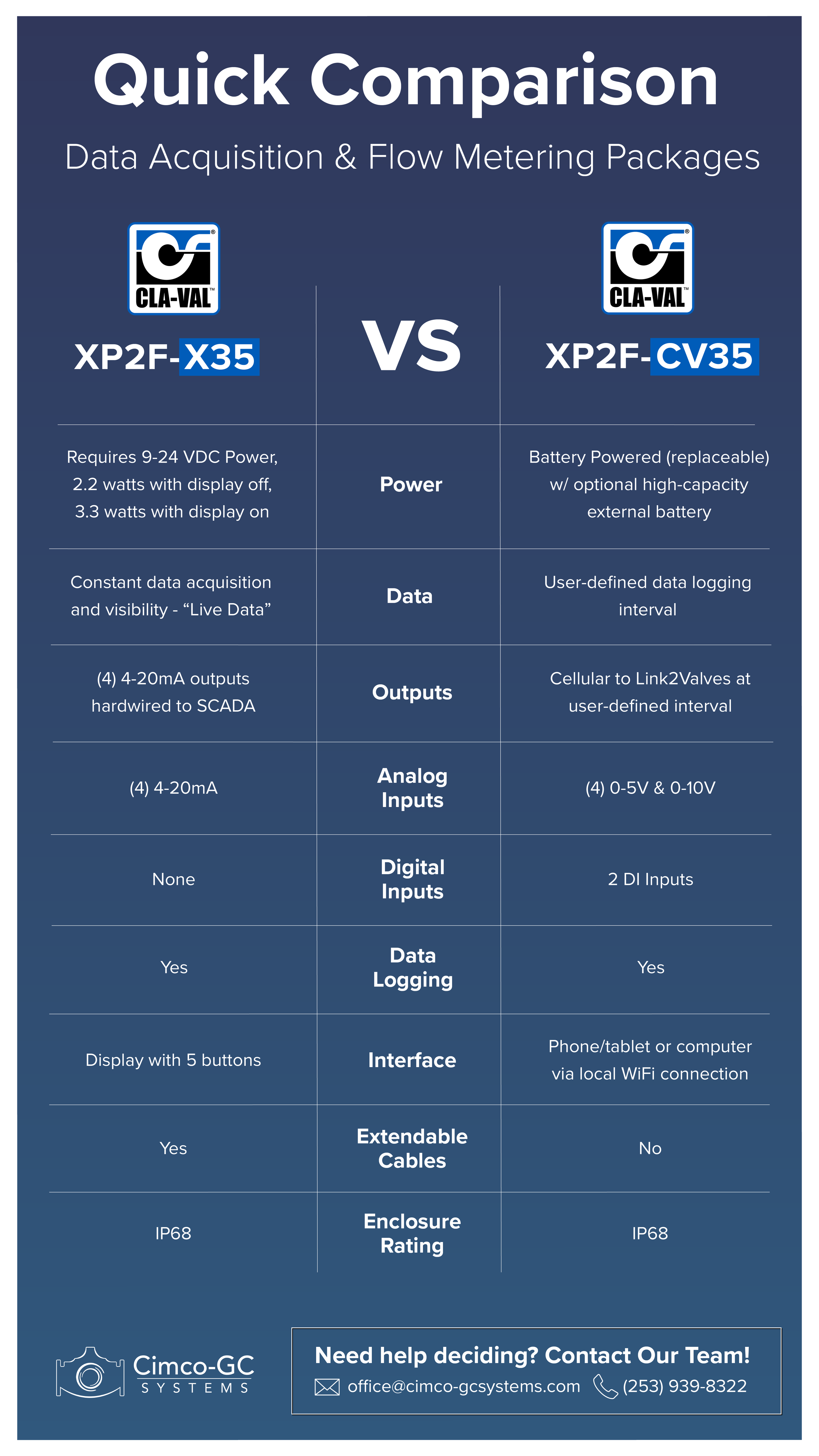
Where they differ is in how they’re powered, how they communicate, and how you’re able to view the data.
Three Questions That Determine the Right XP2F Package
Choosing the right XP2F option usually comes down to three practical questions about the valve site itself.
1. How Will You Power the Unit?
The first question is simple: do you already have power at the site?
If the valve is located in a pump station, treatment facility, or another location with a reliable power supply, the XP2F-X35 fits naturally. It’s designed to be powered on site and works well in environments where electrical infrastructure is already in place.
If the site does not have power—or bringing power to it would be costly or impractical—the XP2F-CV35 was built for that situation. It is typically battery powered, with battery life ranging from 2-7 years depending on configuration and usage. It’s worth noting that the XP2F-CV35 can also be externally powered if power is available, but battery operation is what makes it especially valuable in remote locations.
This question alone narrows the choice significantly.
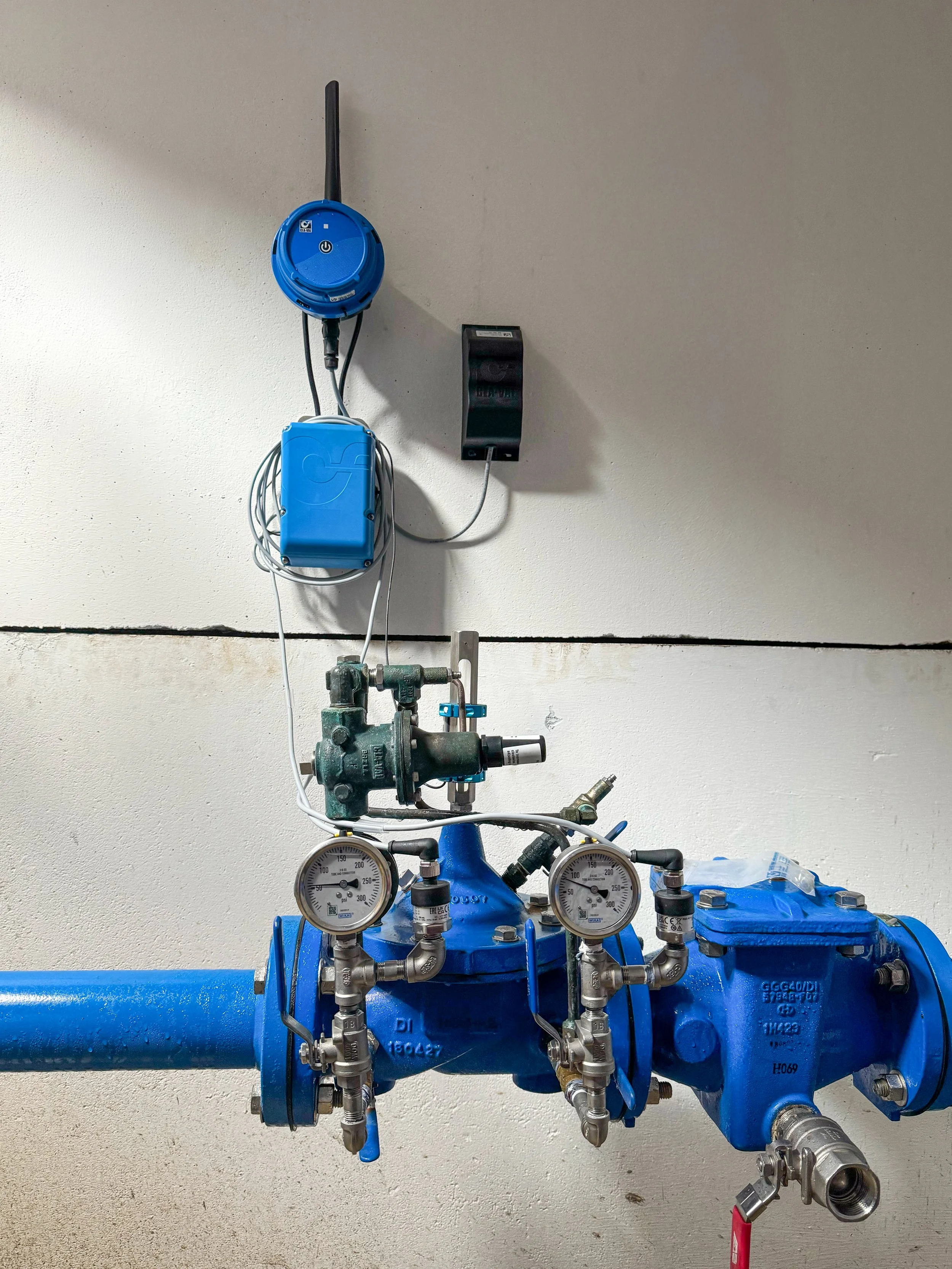
The XP2F-CV35 is battery powered and does not require external power onsite, making it ideal for remote locations.
2. How Will You Receive Communications from the Unit?
Next, think about how data will get from the valve back to you.
The XP2F-X35 requires a local, wired connection. It integrates directly into SCADA or PLC systems using standard 4–20 mA signals. If the site already has communications infrastructure, this can be a clean, simple setup.
The XP2F-CV35, on the other hand, uses cellular communication. It does not require local wiring at the site. Data is transmitted over a cellular network to Link2Valves, Cla-Val's asset management platform, and can be ported over into a SCADA or AMI system.
In practical terms, if there’s no wired connection available—or you don’t want to install one—the CV35 removes that barrier entirely.
(It should also be noted that both units can log data internally, which can then be downloaded with a USB connection. So it is possible to use either unit without a cellular or 4-20mA connection.)
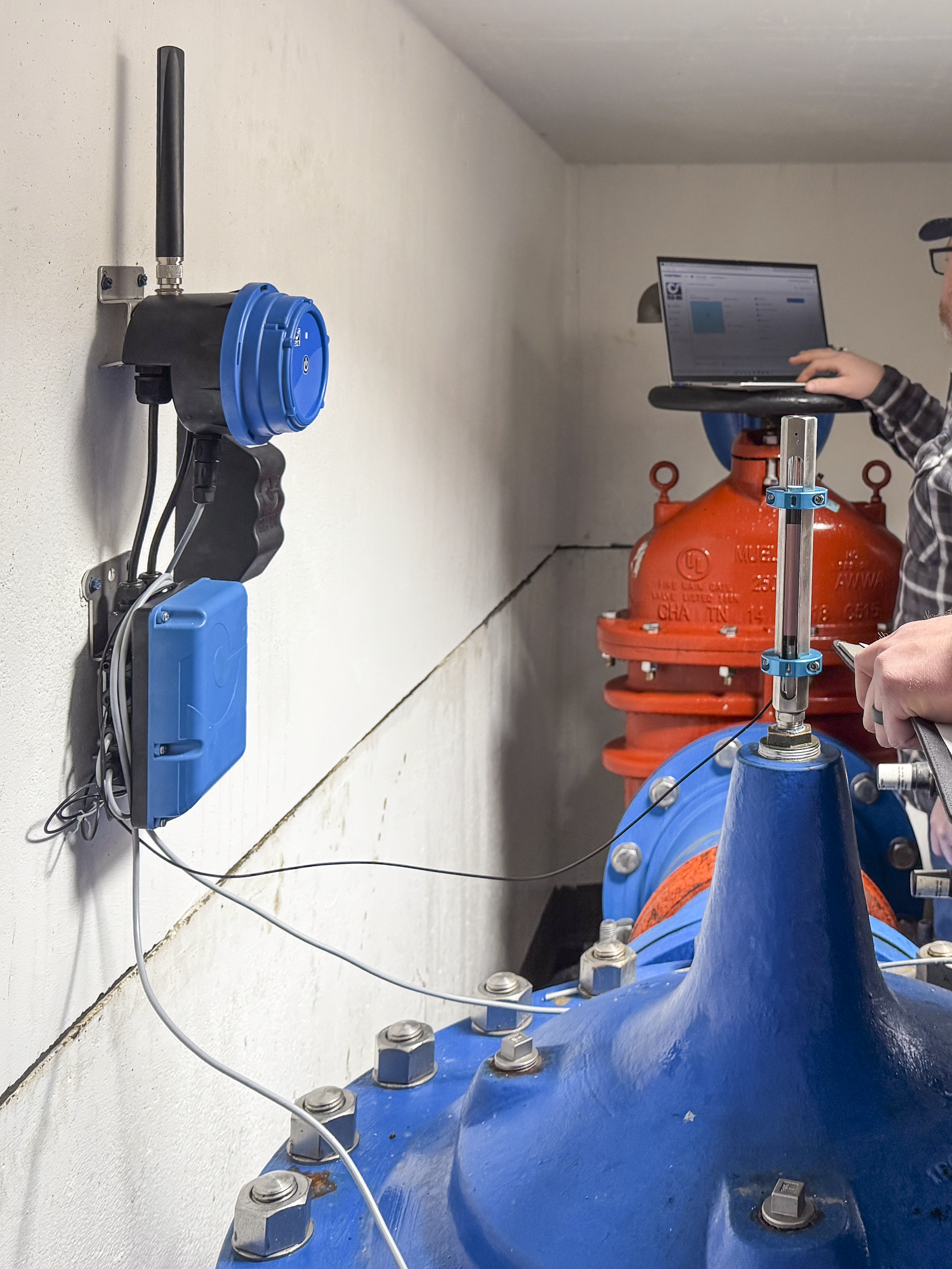
The XP2F-CV35 communicates via cellular signal, no local/wired connection needed.
3. How Do You Want to View the Data?
Finally, consider how you want to view the information once it’s collected.
The XP2F-X35 includes an on-board display at the valve. That allows you to see inlet pressure, outlet pressure, valve position, and flow locally, right at the site. The data can also be viewed live through your SCADA system remotely.
The XP2F-CV35 does not have an on-board display. Instead, data is accessed remotely through Link2Valves and can be connected to SCADA via cellular signal.
Neither approach is better or worse; it just comes down to what fits your workflows and preferences. Both the X35 and the CV35 give you the option of connecting via Wi-Fi when you’re on site, as long as you’re within range of the signal. For many operators, this means viewing the information from your work truck, rather than climbing down into the vault.
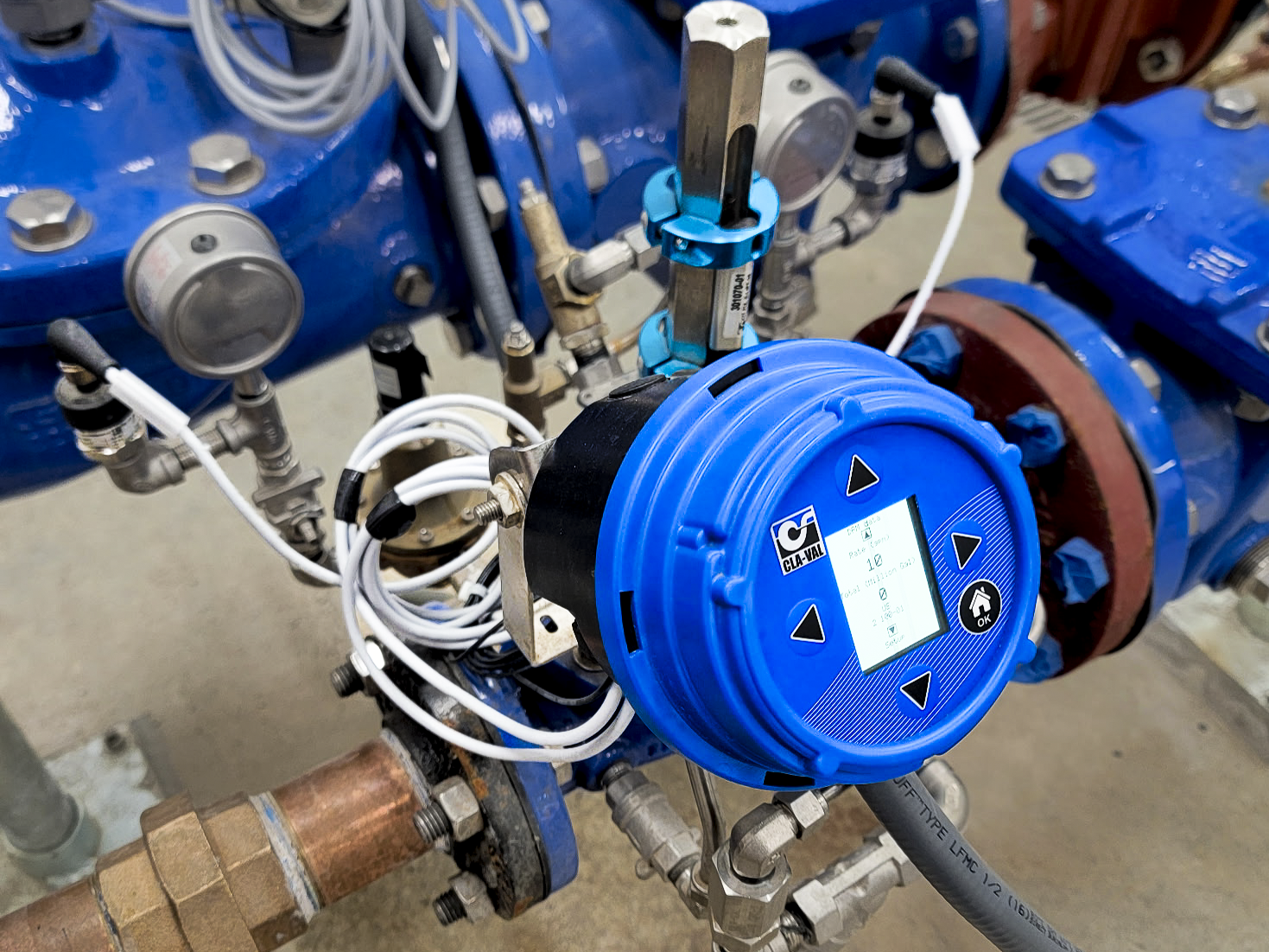
The XP2F-X35 has on-board display, allowing you to read pressures, position, and flow right at the site.
Two Real-World Examples
In practice, the right choice is often obvious once you look at the application.
Pump stations are a great example. They almost always have power and communications already in place. In those environments, the XP2F-X35 makes sense. It integrates smoothly with existing systems and provides continuous, live feedback without adding unnecessary complexity.
Remote valve sites are a different matter. Running power and communications to isolated locations can be expensive. In those cases, the XP2F-CV35 is usually the better fit. Battery power and cellular communication make it possible to collect meaningful data from places that were previously hard to monitor.
Many systems end up using a mix of both approaches, depending on locations of the valves.
If You’re Considering the XP2F-CV35
If you’re leaning toward the CV-Log-35 option, there are a couple practical points to keep in mind.
Battery life depends on how often data is transmitted and how alerts are configured. Planning battery replacement before failure helps avoid data gaps. Cellular performance depends on coverage and antenna placement, and a cellular chip is required for data transmission. Network options and configuration matter, and they’re worth discussing up front so expectations are clear.
None of these are deal-breakers—but they are part of making the system work well long term.
Closing Thoughts
There is enormous potential with implementing data collection on your existing Cla-Vals, but adding XP2F technology doesn’t have to be a huge leap. At its core, it’s about collecting and leveraging the information that best helps you optimize your system.
If you’re clear on how the site is powered, how data can communicate, and how you want to view that data, the right XP2F package usually becomes clear pretty quickly.
Lean on our team! We're always happy to talk through your system, your sites, and your goals—and help you decide what makes the most sense for you.