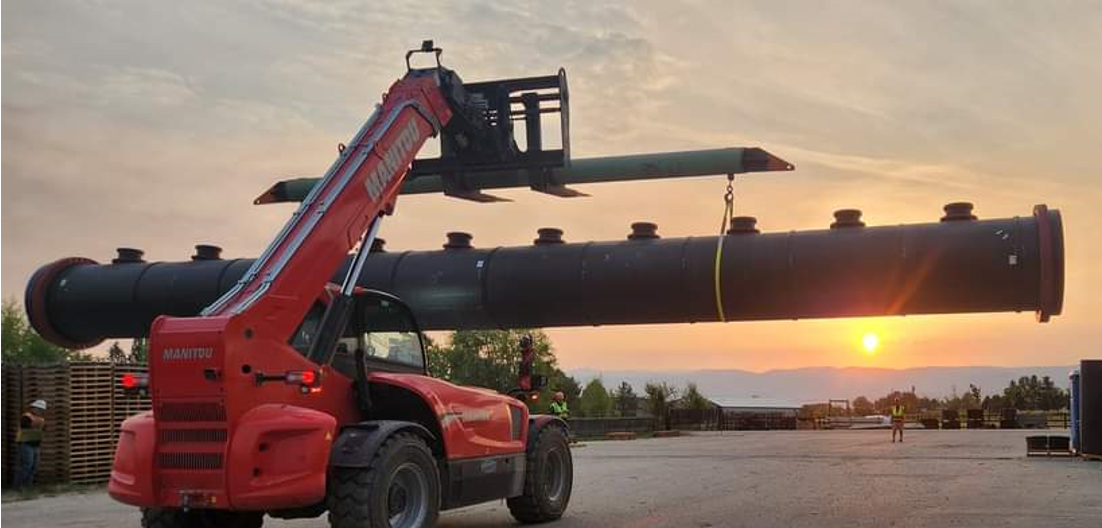
Where HDPE Fits: Capabilities, Tradeoffs, and Custom Solutions
Article Takeaways
HDPE is an established piping material with a distinct combination of properties that can make it particularly well suited to certain engineering challenges.
Key characteristics include long service life, flexibility, chemical resistance, and hydraulic efficiency.
HDPE also comes with important design and installation considerations, including above-ground support, specialized fusion equipment and training, and limitations involving certain hydrocarbons.
Custom fabrication significantly expands what’s possible with HDPE. Harco can engineer and fabricate highly customized fittings for complex applications, with technical support and traceability built into the process.
Familiar Material, Less Familiar Capabilities
High-density polyethylene (HDPE) pipe has been used since the 1960s across a wide range of applications including potable water, sewer, natural gas distribution, and mining. It is an established piping material covered by AWWA, NSF, and ASTM standards.
While it’s a familiar piping option, some of its capabilities and the technical resources available to support its use are less familiar.
During a recent conversation about custom-fabricated HDPE fittings, an engineer told us, “I wish I had known about this when I was working on our wastewater treatment plant.” He knew HDPE was an option. What he hadn’t known was the extent of the custom fabrication and engineering support available to help solve a difficult application.
Understanding HDPE’s capabilities, its design and installation considerations, and what’s possible through custom fabrication can help engineers recognize when HDPE is particularly well suited for the project.
What Makes HDPE Different
There are four key characteristics that are useful to understand when evaluating HDPE.
Long Service Life: HDPE does not corrode or tuberculate, giving it the potential for a very long service life underground. Modern PE4710 pressure pipe is expected to have at least a 100-year service life, with testing and projections indicating the material itself can last considerably longer under appropriate operating conditions.
Flexibility: HDPE can bend along a gradual radius, allowing long runs to follow changes in direction without requiring multiple fittings along the way. Its flexibility also means HDPE performs well under pressure surges, with PE4710 pressure pipe designed to accommodate recurring and occasional surge pressures above its normal pressure class.
Chemical Resistance: HDPE is resistant to a broad range of chemicals and does not require coatings or linings to protect it from corrosion. That can make it particularly useful in aggressive soils and other environments where corrosion is a concern. There are exceptions, however, including potable water systems where hydrocarbons may be present in the soil.
Hydraulic Efficiency: HDPE has a smooth interior surface with a Hazen-Williams C factor of approximately 150. Because HDPE does not corrode or tuberculate, its hydraulic efficiency is not diminished by those processes, helping the pipe maintain its flow characteristics throughout its service life (Plastics Pipe Institute).
These characteristics can make HDPE a strong choice for challenging piping applications. But they also come with tradeoffs that need to be considered when specifying the material.
Understanding the Tradeoffs
Flexibility is a good example. For below-grade applications, the ability of HDPE to bend can be an advantage. Above ground, that flexibility means the pipe needs proper support.
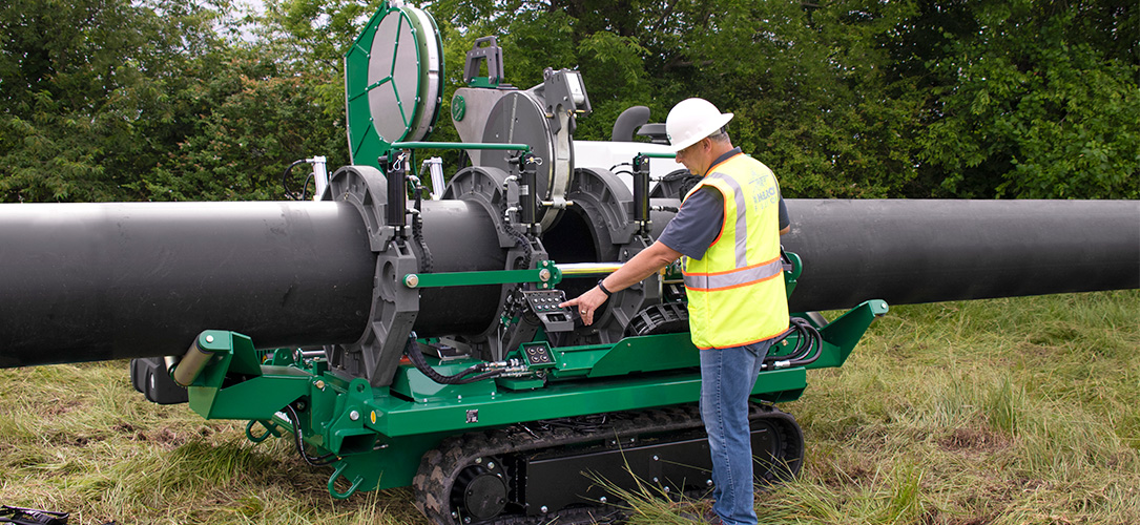
Joining HDPE requires a different approach than many other plastic piping systems. HDPE cannot be joined using solvent cements. Instead, connections are made through heat fusion, which requires trained personnel and specialized equipment. Butt fusion heats the ends of two pipes before pressing them together to form a joint, while electrofusion uses fittings with embedded heating elements to fuse the fitting and pipe together. Butt fusion in particular can require substantial equipment and enough working space to operate it.
The advantage, however, is that properly fused joints can be as strong as or stronger than the pipe itself. Properly fused HDPE joints are also self-restraining. In a fully fused HDPE system, this can eliminate the need for separate thrust restraints or thrust blocks.
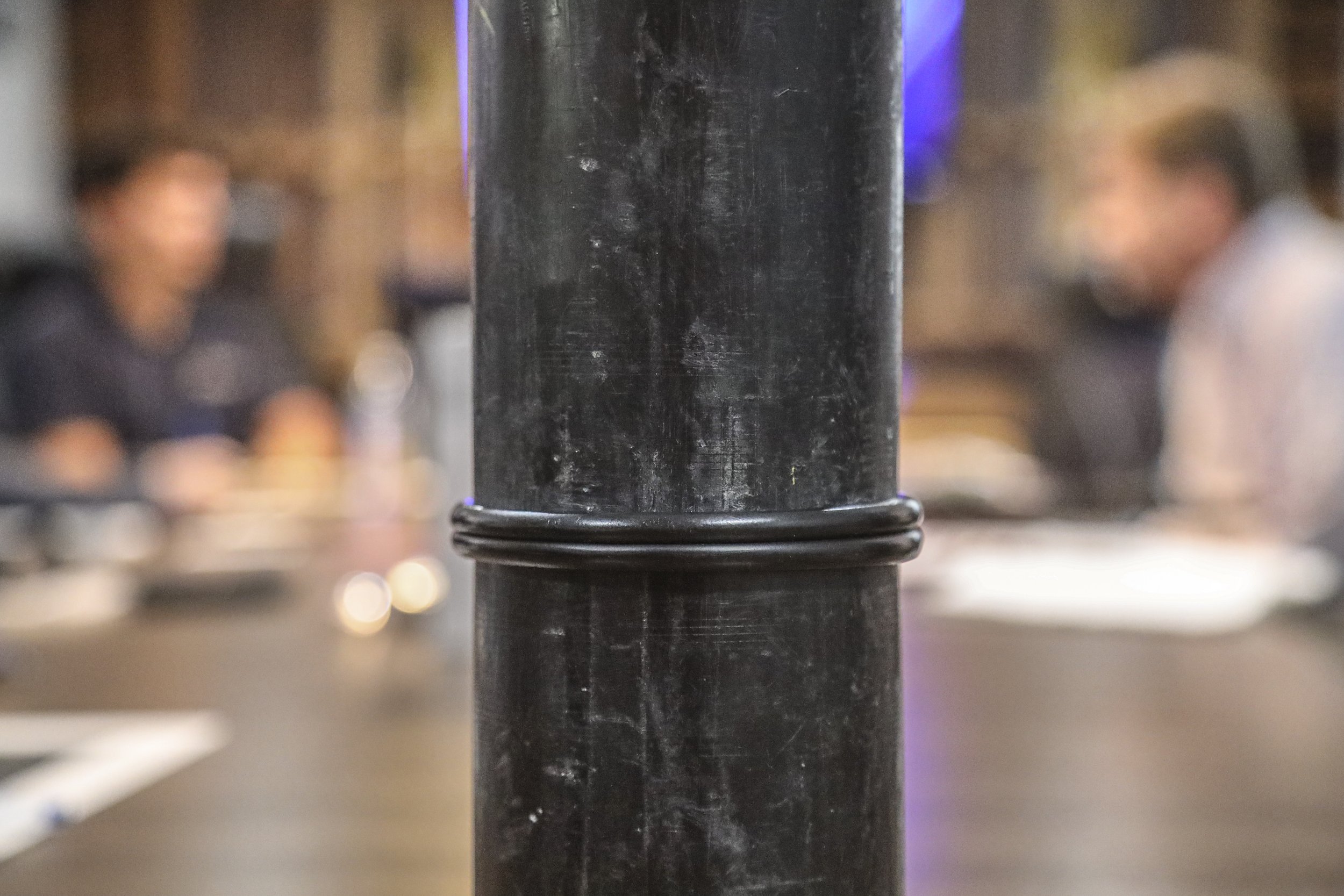
Butt fusion joint sample showing double bead from two pipes pressed together
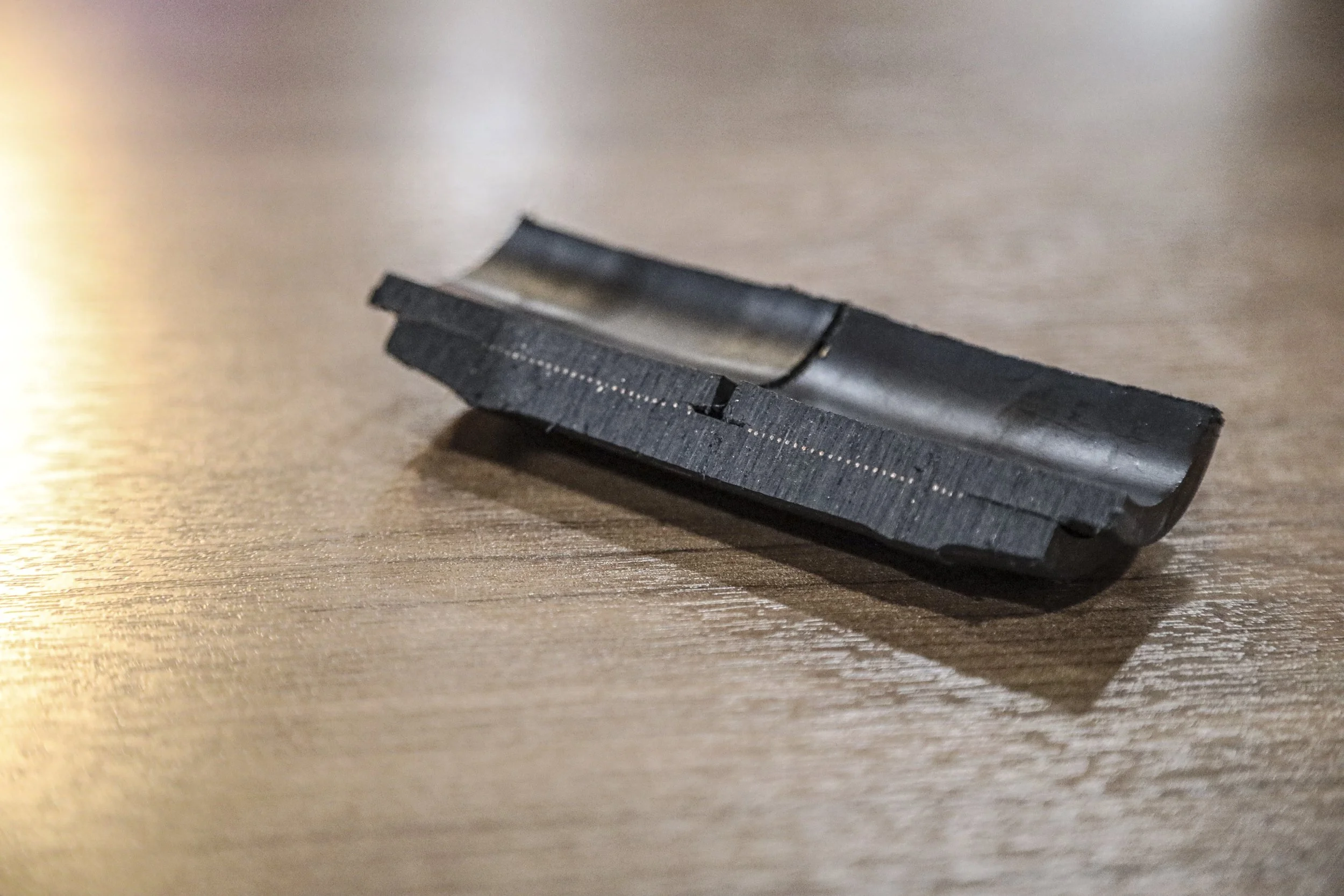
Cross section sample of electrofusion joint showing heating coil
HDPE’s chemical resistance comes with another important consideration. While the material resists many chemicals commonly encountered in soil and water systems, certain hydrocarbons can permeate the pipe wall and potentially affect the water inside. For potable water systems, this means that known or suspected petroleum contamination in the surrounding soil needs to be evaluated when selecting pipe materials.
Solving Difficult Engineering Challenges with Custom-Fabricated HDPE Fittings
HDPE offers another valuable capability: the ability to fabricate fittings for very specific applications.
Sometimes a project calls for a fitting you simply can’t find anywhere else. It might be an unusual angle, a specific configuration, an exceptionally large fitting, or a replacement for something already installed in the field. HDPE pipe can be cut and fused to create highly customized fittings for these specific needs.
This kind of custom fabrication is where Harco Fittings is a valuable partner. Harco combines decades of experience with specialized fabrication equipment that doesn’t exist anywhere else, allowing them to create fittings around the needs of the application, even configurations that might not initially seem possible.
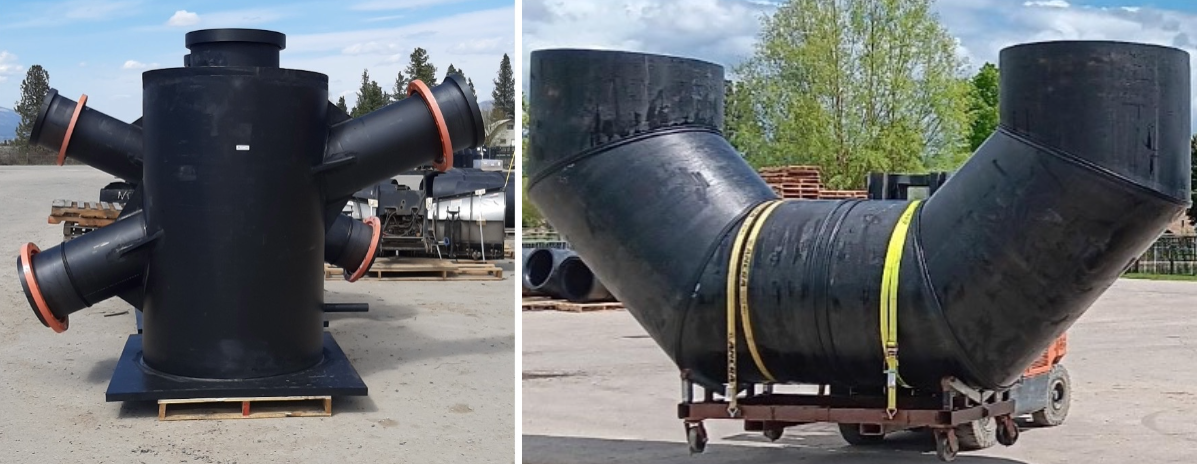
Examples of highly-customized HDPE fittings fabricated by Harco
Harco has a team of engineers who can work directly with the designing engineer to develop a fitting that meets the requirements of the system.
Since fabricating a fitting from HDPE pipe reduces its pressure rating by one class, Harco starts with pipe that is one pressure class higher than the finished fitting requires. Pipe for custom fittings can also be sourced to meet specific project requirements, including BABA compliance.
Harco also builds traceability into every fabricated fitting. A traceability stamp embedded in each fusion bead links back to the material used, the personnel involved, and parameters including time, temperature, and pressure. That gives engineers and project owners a documented history of how each joint was made and the materials and processes behind it.
Recognize When HDPE Fits
Material selection starts with understanding the options available and where their particular capabilities matter. When considering HDPE, involve the technical resources available to you early. Our team and Harco’s engineers can help evaluate the application, work through questions, and provide the support needed to bring your design to life.
Harco’s team likes to say, “If you can draw it on a napkin, we can make it.” There are certainly engineering realities behind every fitting. But the next time a project calls for an unusual configuration or a solution that isn’t readily available, it’s worth exploring what can be done with HDPE. You may be surprised by what’s possible.